Energy efficiency in a manufactured home is not one feature or one brand name. It begins with the federal construction standards that apply to HUD-code manufactured homes, then varies by the home’s climate zone, size, equipment, design, and optional high-performance package.
For California buyers, the practical question is not simply whether a home is “energy efficient.” It is: what is included in this specific home, how does it perform for the intended location, and does it go beyond the applicable federal baseline?
Performance Realty represents more than one manufacturer. We help buyers compare floor plans, options, site considerations, and questions to ask about energy features before ordering a home.
The baseline: HUD-code homes and energy standards
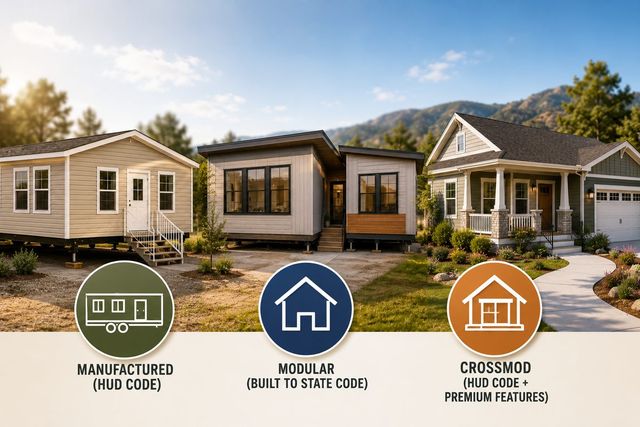
New manufactured homes are built under the federal Manufactured Home Construction and Safety Standards, commonly called the HUD Code. The federal framework covers design, construction, strength, fire safety, transportability, quality, and energy-related requirements for manufactured homes.
The U.S. Department of Energy has also adopted energy-conservation standards for manufactured housing. Those standards address elements that materially affect energy use, including the building thermal envelope, insulation installation, air sealing, duct sealing, heating and cooling equipment, water heating, mechanical ventilation, and equipment sizing.
The applicable requirements are not identical for every manufactured home. They can vary by climate zone and by whether the home is a single-section or multi-section home. That means buyers should ask about the specifications of the actual model and the location where it will be installed — not rely solely on a broad label.
What “Zero Energy Ready” means
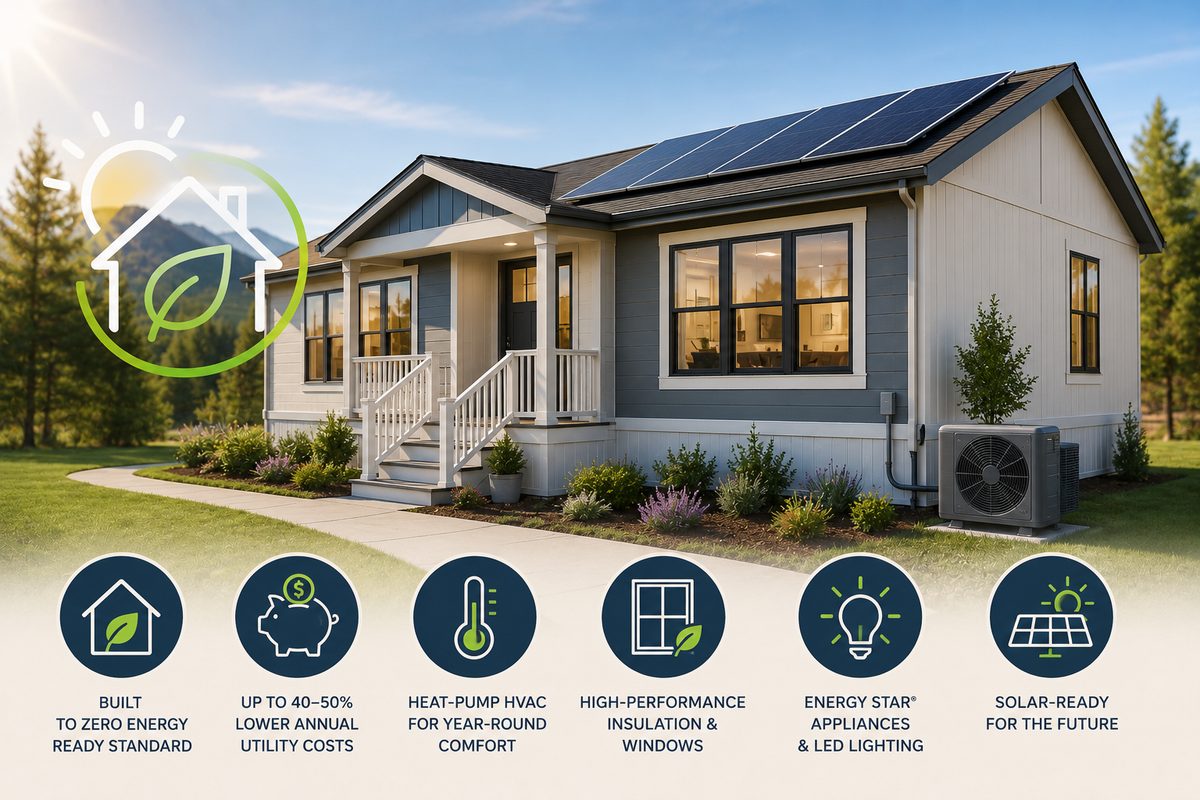
A Zero Energy Ready Home is designed to use substantially less energy than a typical home and to be ready for a renewable-energy system, such as solar, that could offset some or all of its remaining energy use.
“Zero Energy Ready” does not mean that every home will automatically produce as much energy as it consumes. Solar equipment, site orientation, shading, local utility rules, homeowner usage, climate, system size, and other conditions all affect that outcome.
The more useful buyer takeaway is this: a Zero Energy Ready home is built with a more efficient envelope and systems so that adding renewable energy later may be more practical. The U.S. Department of Energy’s Zero Energy Ready Home program is a higher-performance benchmark beyond ordinary code compliance.
What features affect efficiency?
Energy performance comes from how the home works as a system — not from a single appliance or marketing term.
When comparing manufactured homes, ask about:
- Insulation and thermal envelope: wall, ceiling, and floor insulation; air sealing; and how the home is designed for the applicable climate zone.
- Windows and doors: low-emissivity windows, window performance, door insulation, and installation quality can affect heat gain and heat loss.
- Heating and cooling: heat-pump or furnace options, equipment sizing, duct design, and sealed ducts can materially affect comfort and operating costs.
- Water heating: conventional, hybrid heat-pump, or other water-heating options may have different operating characteristics.
- Ventilation: whole-house ventilation is important because a tighter home needs intentional airflow and moisture management.
- Lighting and appliances: LED lighting and efficient appliances can reduce energy use, although actual savings depend on household use.
- Solar readiness: a solar-ready design is not the same as an installed solar system. Ask what is included, what is optional, and what site work or electrical upgrades may be required.
Clayton eBuilt homes
Clayton’s eBuilt program is a manufacturer-specific higher-performance offering. Clayton states that eBuilt Plus homes are constructed to the U.S. Department of Energy’s Zero Energy Ready Home standards and include solar-ready capability.
Depending on the selected home and available package, Clayton identifies features such as a high-efficiency heat pump or furnace, hybrid heat-pump water heater, low-E argon-filled windows, smart thermostat, ENERGY STAR-certified appliances, LED lighting, insulated exterior doors, added insulation, a tighter thermal envelope, and whole-home ventilation. Features, availability, and specifications should be confirmed for the particular model and order.
Clayton has stated that certain eBuilt homes may reduce annual energy bills by up to 50 percent compared with a traditional manufactured home. That is a manufacturer claim, not a guaranteed buyer result. Actual operating costs depend on the home model, climate, utility rates, household behavior, equipment choices, maintenance, solar configuration, and site conditions.
Champion EcoWise homes
Champion Homes also offers a manufacturer-specific higher-performance program called EcoWise. Champion describes EcoWise as its most energy-efficient design approach and states that EcoWise homes meet or exceed the guidelines associated with the U.S. Department of Energy Zero Energy Ready Home program.
As Performance Realty expands its manufacturer relationships, the important buyer question remains the same: which energy features are standard in this model, which are options, and how do they fit the home’s intended California location and total project budget?
Questions to ask before ordering
Before selecting an energy package or comparing manufacturers, ask:
- What energy features are standard in this exact floor plan?
- Which features are upgrades, options, or available only on certain models?
- What climate-zone requirements apply where the home will be installed?
- Is the home equipped with a heat pump, furnace, hybrid water heater, or another system?
- Is solar readiness included, and what does that specifically mean?
- What electrical capacity, roof condition, site orientation, shading, or utility approvals may affect a future solar installation?
- Are there utility, local, state, or federal programs available for which I should independently confirm eligibility?
- What do the manufacturer’s warranty and operating instructions say about the installed systems?
The practical takeaway
A well-designed manufactured home can offer meaningful comfort and energy-performance advantages. But buyers should compare the actual specifications of the home — not just the label on the brochure.
Performance Realty can help you compare available floor plans and manufacturer options, understand which features are included, and identify the broader questions to address before delivery and installation. For financing or lending options, buyers should speak with qualified third-party lenders or brokers about their individual situation.